In this guide
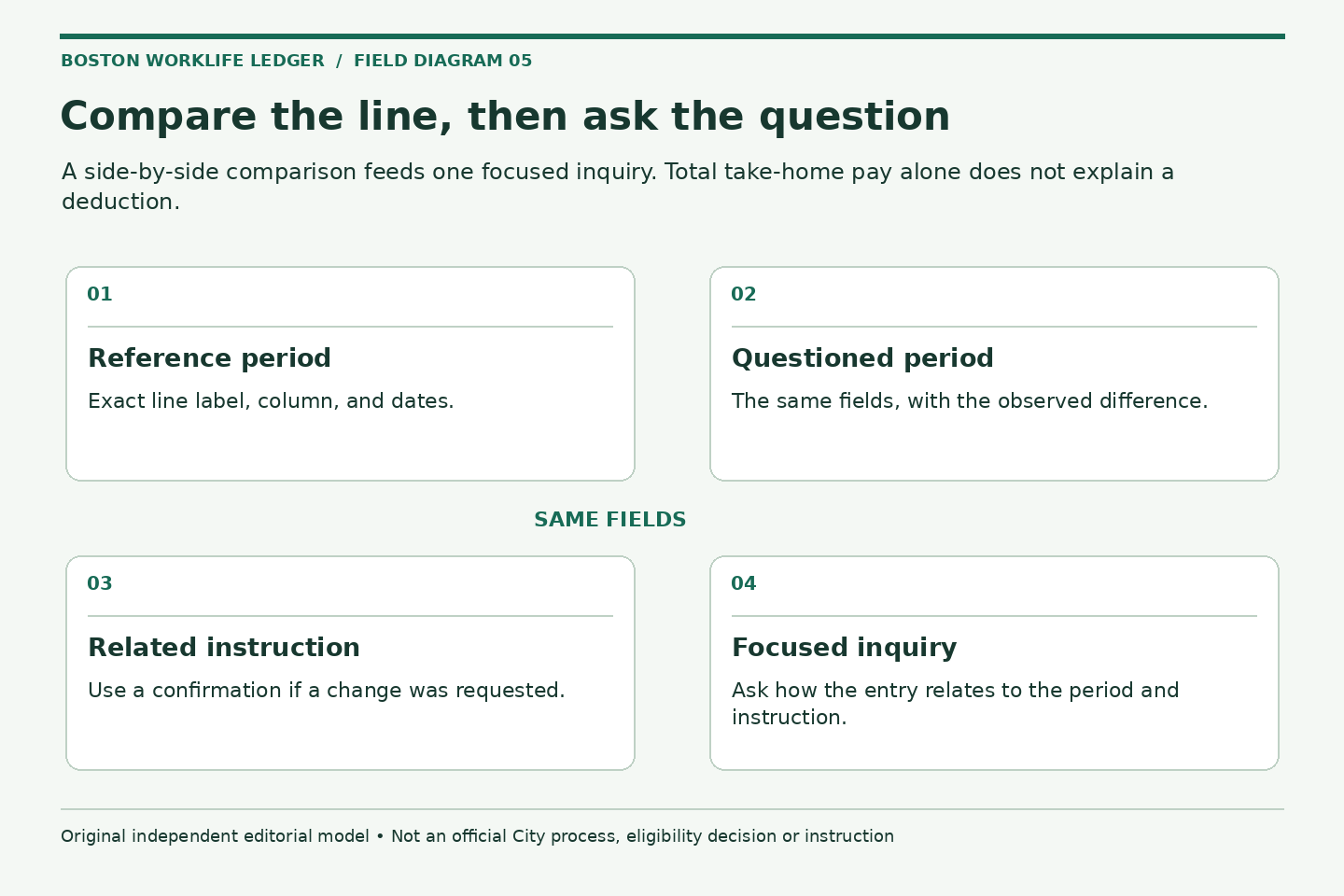
A different take-home amount is a signal to inspect a paycheck, not a diagnosis. Several entries can change between periods. A useful payroll inquiry isolates the exact line, the dates involved, and the instruction or confirmation that prompted the question.
The City employee handbook’s compensation section, checked October 2, 2026, directs employees to review paychecks and report issues to departmental HR. It identifies Central Payroll as a source for deduction explanations. Confirm the current route for your question. This article does not calculate tax, benefits, or pay entitlement.
Compare like with like
Choose the paycheck you are asking about and a relevant comparison period. Record pay-period dates separately from payment dates. Check whether the periods represent the same kind of work pattern before assuming that a difference in the total has a single cause.
Copy the deduction label exactly into your private notes. Record whether your question concerns the current-period entry, a year-to-date figure, or another field. Mixing those columns can create a discrepancy that is only a reading error.
Attach a reason for the question
If the question follows a confirmed benefit change, identify the confirmation and its effective date. If no change was requested, say that plainly. Do not invent a processing rule or assume that every administrative change appears in the next paycheck.
A focused inquiry asks the office to explain how the entry relates to the period and confirmed instruction. It does not demand a particular correction before the facts are reviewed. If the amount is unexpected, record it privately and share it only through the channel appropriate for payroll records.
Reconciliation checklist
- Paycheck and comparison-period dates recorded
- Exact label and relevant column identified
- Related election, leave, or commuter confirmation located if applicable
- One clear explanation or correction question written
- Secure submission method and case reference retained
A full paycheck can contain banking, tax, and other personal information unrelated to the issue. Ask what the receiving office needs before forwarding the whole document. Never put account numbers into a routine subject line or send the same attachment to several offices merely to improve the chance of a response.
A hypothetical deduction mismatch
Suppose an employee receives confirmation of a benefit update and later notices an unfamiliar deduction amount. They compare the relevant line across two periods, note the confirmed effective date, and ask payroll how the entry should be interpreted.
The employee does not assume the discrepancy proves a loss of coverage or an overpayment. Payroll may need information from another administrator. The employee records that handoff and keeps both the benefits question and payroll question open until each has an answer.
Separate related records
The enrollment review guide focuses on whether a benefits request was completed as intended. A separate benefits invoice has its own reference and coverage-period questions. Treat those documents as related evidence, not interchangeable statements.
If an office explains a timing difference, record which period it expects you to inspect next and what result would require another inquiry. That creates a verifiable follow-up instead of indefinite repeated checking.
Finish by comparing the response with your original question. If the explanation addresses the total but not the line you flagged, ask about that remaining point. Keep an appropriate private record of the answer, without building a permanent collection of unnecessary paycheck copies.
Related reading: Turn benefits materials into a clear enrollment question list, What to record when a separate benefits bill arrives.